US and Iran fail to reach a deal after marathon talks in Pakistan
US Vice President JD Vance says Iran is choosing not to accept US truce terms, while Iran says it did not expect a deal in the first meeting.
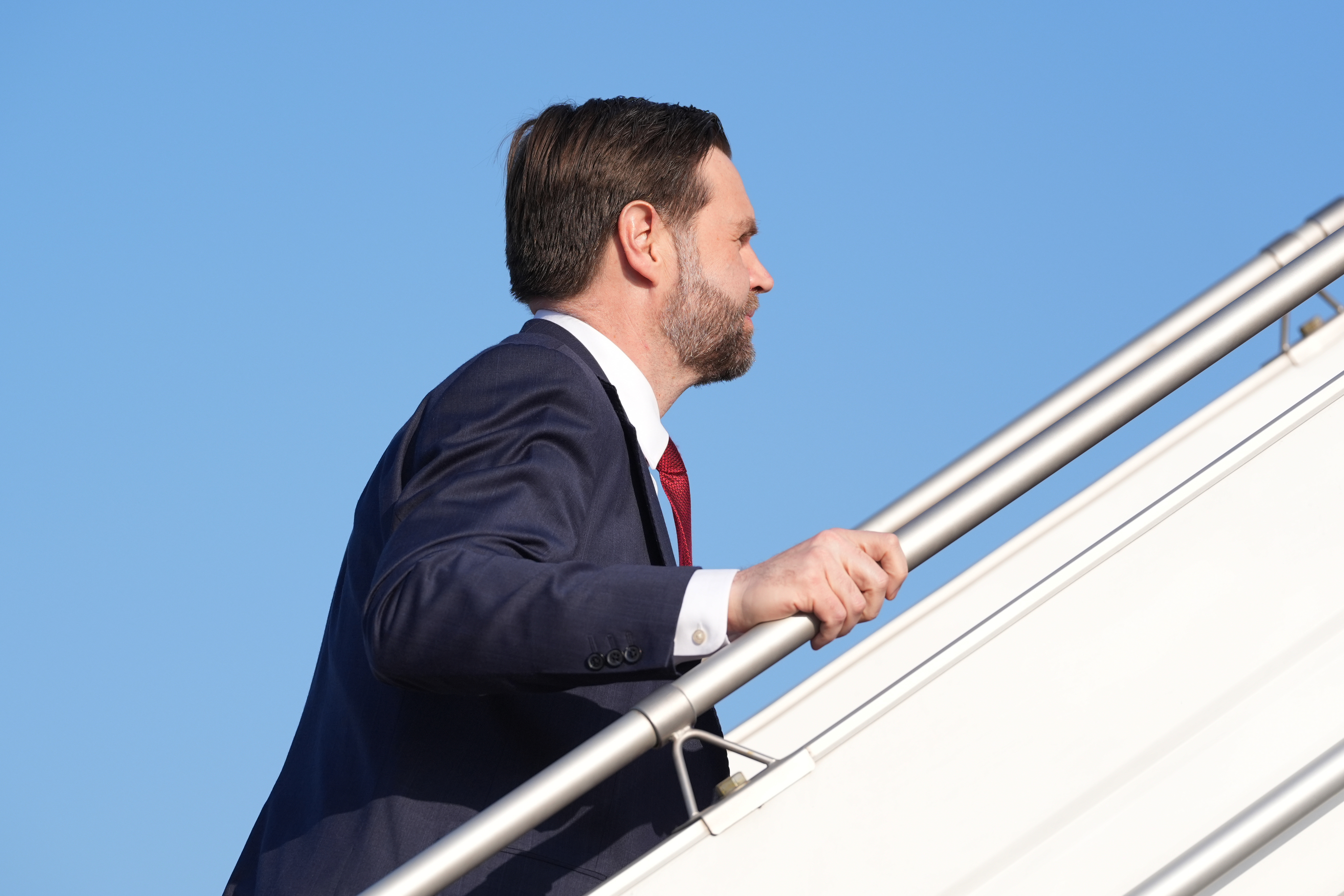

The United States and Iran have failed to reach a truce deal after high-stakes talks in the Pakistani capital, with US Vice President JD Vance saying Tehran has refused to accept Washington’s terms after 21 hours of negotiations in Islamabad.
“The bad news is that we have not reached an agreement, and I think that’s bad news for Iran much more than it’s bad news for the United States of America,” Vance, the head of the US delegation, told reporters on Sunday, shortly before he left Islamabad after the highest-level meeting between Washington and Tehran since the 1979 Islamic Revolution.
Recommended Stories
list of 4 items- list 1 of 4Netanyahu next to Middle East map: ‘We strangled them and have more to do’
- list 2 of 4Iran must not charge tolls in Strait of Hormuz, UN maritime chief says
- list 3 of 4US delegation leaves Pakistan without reaching Iran deal
- list 4 of 4Watch JD Vance’s full remarks after US-Iran talks end without deal
He said Iran chose “not to accept our terms” at the talks, which began on Saturday, adding that the US needs to see a “fundamental commitment” from Tehran not to develop nuclear weapons.
“We need to see an affirmative commitment that they will not seek a nuclear weapon and they will not seek the tools that would enable them to quickly achieve a nuclear weapon,” Vance said during a ceasefire in the six-week US-Israeli war on Iran.
Al Jazeera’s John Hendren, reporting from Washington, DC, said the fact that US President Donald Trump sent Vance showed the US was taking these talks seriously.
“The fact that Vance left doesn’t necessarily mean that the talks are over,” he said, adding that the main sticking points seem to be the Strait of Hormuz, which Iran continues to essentially control, and the gaps in the nuclear issue.
“The US has been negotiating with Iran over time. Those talks can continue remotely, and leaving those talks may simply be a hard stance,” the Al Jazeera correspondent said.
Hendren said the US is demanding not just that Iran pledge it will not develop nuclear weapons, but also that it will not even try to access those tools, adding that such gaps made talks in the mid-2010s take years to negotiate. Iran and the US ended up achieving a 2015 nuclear accord under then-US President Barack Obama, which Trump walked away from three years later.
Tehran expects contacts to continue
Iran’s Ministry of Foreign Affairs said on Sunday that no one had expected the talks with the US to reach an agreement in one day.
“Naturally, from the beginning, we should not have expected to reach an agreement in a single session. No one had such an expectation,” ministry spokesperson Esmaeil Baghaei said, according to state broadcaster IRIB.
He said Tehran was “confident that contacts between us and Pakistan as well as our other friends in the region will continue”.
Iran’s Parliament Speaker Mohammad Bagher Ghalibaf, the leader of Tehran’s delegation in Islamabad, said it raised “forward-looking” initiatives, but the US failed to gain the trust of his delegation in the talks.
“The US has understood Iran’s logic and principles, and it’s time for them to decide whether they can earn our trust or not,” Ghalibaf said in a post on X.
Al Jazeera’s Tohid Asadi, reporting from Tehran, said the Iranian side did not share information on the technicalities or other details pertaining to the points of controversy in the talks.
“Previously, the domain of the talks between Washington and Iran was concentrated upon the nuclear dossier and stockpile of highly enriched uranium, and that was a matter of controversy in the previous rounds of negotiations,” he said.
“But this time, we’re dealing with a rather comprehensive approach when it comes to other issues, and obviously, with that comprehensiveness come other controversial issues,” the Al Jazeera correspondent said, adding that the rival sides are looking to address many other subjects, from the Strait of Hormuz to security assurances.
Asadi said people on the streets of Tehran are not hopeful about a two-week ceasefire that began on Wednesday and the diplomatic engagement between the sides.
“They say that the main reason is the lack of trust and add that this is not the first time they see Tehran negotiate with the Americans,” he said, noting that Iranians are aware that past initiatives did not produce a lasting solution.
As well as the release of frozen assets abroad, Tehran is demanding control of the Strait of Hormuz, payment of war reparations and a ceasefire across the region, including in Lebanon, according to Iranian state TV and officials.
However, US ally Israel has refused to stop its offensive against the Hezbollah group in Lebanon. Tehran said the ceasefire agreed last week included the war in Lebanon, but the US and Israel have both rejected that. An initial post by Pakistani Prime Minister Shehbaz Sharif announcing the ceasefire included Lebanon in it.
As the talks were under way in Islamabad, Israeli Prime Minister Benjamin Netanyahu said his country’s military campaign against Iran was not over. “Israel under my leadership will continue to fight Iran’s terror regime and its proxies,” he said in a post on X.
Netanyahu also said Israel is seeking a deal with Lebanon. Reports said Yechiel Leiter, the Israeli ambassador to the US, has spoken to the Lebanese envoy in Washington, DC, for the first time. In a statement, Leiter said Israel would not accept a ceasefire with Hezbollah.
Call for continued ceasefire
Meanwhile, Pakistan has called on the US and Iran to uphold their commitment to the ceasefire and continue efforts to achieve a durable peace.
“On behalf of Pakistan, I would like to express gratitude to the two sides for appreciating Pakistan’s efforts to achieve a ceasefire and its mediator role. We hope that the two sides continue with a positive spirit to achieve durable peace and prosperity for the entire region and beyond,” Pakistani Foreign Minister Ishaq Dar said.
Al Jazeera’s Osama Bin Javaid, reporting from Islamabad, said that in the framework proposed by Iran before the talks, there was no mention of a complete surrender of its nuclear ambitions.
“But what the US is essentially asking Iran now is that they give up their right to any nuclear programme, even for medical purposes,” he said.
“There is a sea of mistrust that they are trying to build bridges over, and statements like this and leaving the negotiations with an ultimatum are not going to help bridge those divides,” he said.
The US and Israel launched the war on Iran on February 28, and it quickly expanded to the wider Middle East region as Tehran carried out retaliatory attacks on Israel and neighbouring Gulf countries where US troops and assets are located. More than 2,000 people have been killed, and military and civilian areas damaged and destroyed in the US-Israeli attacks on Iran.
The war began despite several rounds of talks between Washington and Tehran. Oman, the mediator, said the war started although a deal was “within reach”.
Oman’s Foreign Minister Badr Albusaidi said on Sunday that he had the impression when he met Vance, just before the war started, that the vice president and Trump had a “genuine and strong preference to avoid the entanglements of war”.
“So I urge that the ceasefire be extended and talks continue. Success may require everyone to make painful concessions, but this is nothing as compared to the pain of failure and war,” Albusaidi said on X.
The war has caused a global energy crisis as Iran has put a chokehold on the Strait of Hormuz, through which about 20 percent of the world’s oil and gas supplies pass.
The US and Iranian delegations in Islamabad discussed how to advance a ceasefire already threatened by deep disagreements and Israel’s continued attacks against Hezbollah.
Israeli strikes have continued across southern Lebanon, with at least six people killed in its Tyre district in the latest attack.
