Polls close in Hungary as PM Orban faces crunch election
Turnout reached 77.8 percent at 6:30pm (16:30 GMT), above the previous record of a total of 70.5 percent for the 2002 elections.
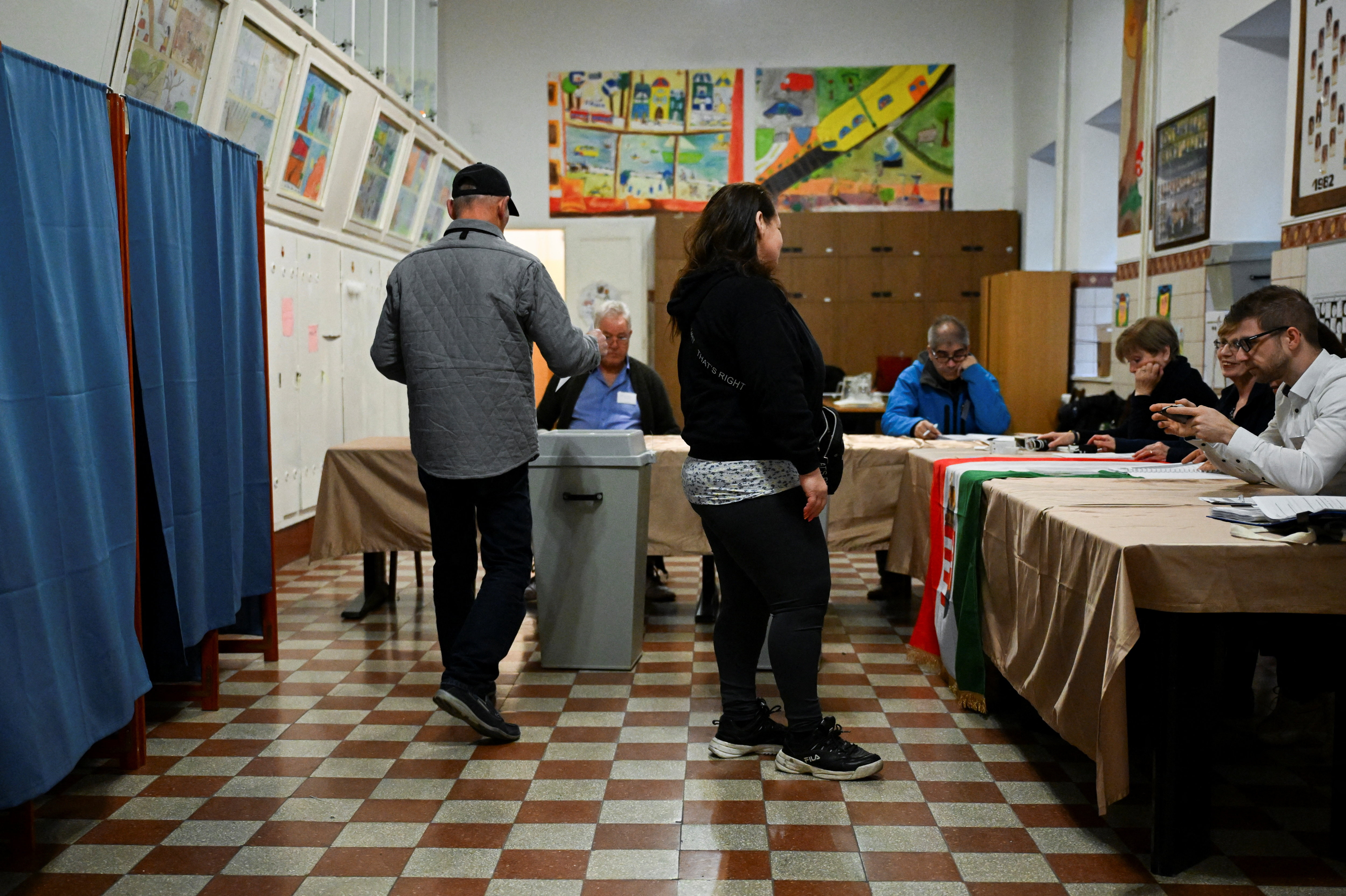

Polls have closed in Hungary’s parliamentary elections, with incumbent Prime Minister Viktor Orban facing his biggest electoral challenge after 16 years in power.
Voting in the election for the country’s 199-seat parliament ended at 7pm (17:00 GMT) on Sunday, with turnout reaching 77.8 percent at 6:30pm (16:30 GMT), above the previous record of a total of 70.5 percent for the 2002 elections.
Recommended Stories
list of 3 items- list 1 of 3EU calls for clarification after Hungary accused of leaking info to Russia
- list 2 of 3‘Orban constantly vetoes’: Europe braces for Hungary election
- list 3 of 3Vance visits Hungary to shore up Orban’s support before Sunday vote
Reporting from Budapest, Al Jazeera’s Step Vaessen said that the election had the highest voter turnout in a “long time”.
“Looking here at the excitement in Hungary,” Vaessen said. “Throughout the country, people have flocked to the polls today in this very decisive moment for the country, deciding which course it will go on.”
Opinion polls over the last two weeks suggested Orban’s Fidesz party was trailing Peter Magyar’s upstart centre-right opposition Tisza party by 7 to 9 percentage points, with Tisza at about 38-41 percent.
Orban, a Eurosceptic nationalist, has cast the election as a choice between “war and peace”. During campaigning, the government blanketed the country with signs warning that Tisza leader Magyar would drag Hungary into Russia’s war with Ukraine, something he strongly denies.
“I am here to win,” said Orban after voting at a polling station in the capital, Budapest.
Many Hungarians have, however, grown increasingly weary of 62-year-old Orban after three years of economic stagnation and soaring living costs, as well as reports of oligarchs close to the government amassing more wealth.
“I am very excited, but also very scared,” Kriszta Tokes, a 24-year-old who sells postcards and trinkets in Budapest, told the Reuters news agency.
“I know that my future depends on this,” she said, adding that she plans to leave Hungary if Orban wins.
After polls closed, Magyar told reporters that he was “cautiously optimistic” about the results.
“Of course, we’re aware of, we’ve seen the latest surveys,” he said.
“Based on those, along with the turnout data and the information we’ve received, we’re optimistic – or rather, cautiously optimistic,” he added.
Orban’s chief of staff, Gergely Gulyas, said at a press briefing that Fidesz was confident of winning a majority following the record-high voter turnout.
“We are glad that the next parliament will have this strong democratic mandate,” Gulyas said.
Former government insider Magyar, 45, burst onto the scene just two years ago, amassing support against the backdrop of economic stagnation, despite an electoral system skewed in favour of Fidesz.
After casting his vote in Budapest, Magyar said Hungarians would write history as they choose “between East and West,” and urged voters to report any irregularities.
“Election fraud is a very serious crime,” he added.
Magyar expressed confidence about the outcome, saying the only question was whether Tisza would secure a simple majority or a two-thirds majority in parliament, which would allow it to amend Hungary’s constitution.
“I think it’s important that there really be a new era, a new, liveable Hungary,” Daniel Pasztor, a pensioner, 60, told the AFP news agency at a Magyar rally in the city of Miskolc in northeastern Hungary on Friday.
According to the National Election Office, the first preliminary results are expected soon after polls close.
But if the race is close, the winner might not be declared until ballot counting is finished next Saturday.
Foreign interference?
There are also fears of foreign interference in the elections.
United States Vice President JD Vance visited Budapest earlier this week to rally with Orban and attacked the alleged interference of “Brussels bureaucrats”. He said US President Donald Trump has promised to bring US “economic might” to Hungary if the party of Orban, a “truly strong and powerful leader”, secures victory.
The vote is being closely watched in Brussels, with many European Union peers criticising Orban, a friend of Russian President Vladimir Putin and a close Trump ally, over what they say is an erosion of Hungary’s democratic rule, media freedom and minority rights.
For Hungary’s eastern neighbour, Ukraine, Orban’s defeat could mean the unblocking of a 90-billion-euro ($105bn) European Union loan vital for Kyiv’s war effort. It would also deprive Russia of its closest ally in the bloc.
